what chemicals are used to grow organic spinach
How to Grow Vegetables...
Organically, of Course!
Pesticide residues. Outbreaks of e. coli and salmonella, even on organic produce. A lot of people want to know how to grow vegetables organically, in their own dorsum thou.
Most backyard gardeners would rather not deal with toxic chemicals, if they have an alternative. Fortunately, they do.
Plant Vigor Puts off Pests
Pests key in on weak plants. Organic gardening relies on healthy, vigorous plants as the first defense confronting pests and diseases.
Plants don't just sit there, letting bugs and diseases set on. They tin can't feel information technology when a bug is chewing on a leaf, but they tin can detect metabolites of their own leaves in the saliva of chewing insects.
| |
| © Steve Masley Click Prototype to Enlarge |
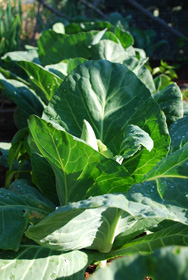
Once they practice, they showtime pumping out chemicals to inhibit feeding. Some of the chemicals plants create for cocky-defence are important phytochemicals in the human diet. Healthy plants mount vigorous defenses against pests and diseases.
Conventionally grown vegetables are burrow potatoes by comparison. Their roots are bathed in chemic fertilizers, and their leaves are sprayed to kill annihilation that crawls. They produce few of these valuable phytochemicals.
So the issue is, how to grow vegetables that are robust enough to repel pests, without chemical fertilizers?
Organic gardeners "feed the soil to feed the plants", calculation compost, animal manures, and/or organic soil amendments to increase soil organic matter and amplify the soil food web.
Extreme heat, common cold, current of air, or drought can stress even robust plants, weakening their defenses and allowing pests to assault them. When this happens, organic gardeners rely on natural garden pest control to check garden pests.
If you want to learn how to abound vegetables organically, you can start with some full general data on the divergence between summer vegetables and fall vegetables—basically the divergence between fruit and vegetables—and why information technology'southward important.
For information on how to abound vegetables in containers, click Hither.
Alliums (Onions) | Amaranths (Spinach) | Brassicas (Broccoli, Cabbage) | Cucurbits (Cucumbers, Squash, Melons)
Legumes (Beans, Peas) | Nightshades (Tomatoes, Peppers, Eggplants)
Umbellifers (Carrots, Celery) | Miscellaneous (Miscellaneous Vegetables)
| |
| Masley…Click IMAGE to Enlarge |
Each vegetable folio is plant contour,
with information on:
- Common cold Tolerance/Season
- Planting Tips
- Soil Needs
- Plant Culture—Watering, Fertilizing,
Plant Care - Pests and Diseases
- Growing in Containers
- Harvesting
How to Abound Vegetables: Crop Families Simplify Organic Gardening
If you want to learn how to abound vegetables, it helps to know something about vegetable establish families. Well-nigh vegetables fall into one of seven plant families (links beneath), only a few—similar corn and rhubarb—take no close crop cousins, so they're grouped under "miscellaneous".
| How to Abound... |
|---|
| |
| |
| |
| |
| |
| |
| |
| |
| |
| |
| |
| |
| |
| |
| |
| |
| |
| |
| |
Plants in the aforementioned family have similar soil, fertility, and cultural needs, and share many common pests and diseases. If you know how to grow tomatoes, y'all besides know something virtually growing peppers, eggplants, and potatoes.
Knowing nigh crop families also helps with pest control and crop rotation. Growing vegetables from the same family on the same spot year after year depletes soils of the nutrients needed past that ingather, and allows pests and diseases to multiply.
Below you'll find photo galleries for each crop family, with links to instructions for growing them above each gallery.
The photos of vegetables below come from my garden and balcony farm, although a few choice pictures come from other gardens at the Stanford Customs Farm, where I accept a plot. Click any photo to run into a larger prototype and description.
All Photos © Steve Masley.
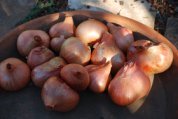
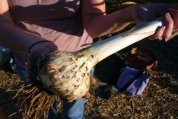
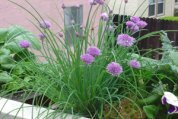
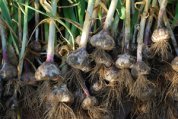
Alliums: Chives | Garlic | Leeks | Onions
Scallions | Shallots
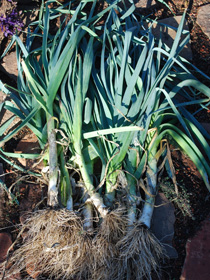
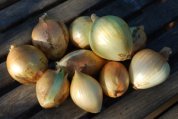
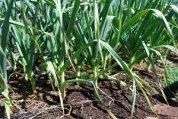
Alliums are onion family plants that are sown in early leap in common cold-wintertime gardens. In areas where the ground doesn't stay frozen through wintertime, they're sown in fall and allowed to overwinter.
In onions, mean solar day length initiates bulb formation in near varieties. At low latitudes—below 35°—summer days aren't long enough to initiate bulb formation in medium- and- long-twenty-four hours varieties, so southern gardeners should choose short-day varieties. Day length is less important for shallots, garlic, leeks, and scallions.
Alliums are moderate feeders that perform best in soils with lots of organic matter, and a neutral to slightly element of group i pH—7-7.5. See Changing Soil pH for ways to adjust pH.
Alliums demand regular water during their nearly pronounced growth, but once the tops have sized up and starting time flopping over, they should be allowed to "dry back" for a week or so earlier harvesting. This improves storage life past allowing protective skins to form on the bulbs.
 |  |  |
 |  |  |
Up to Vegetable Establish Families NavBar
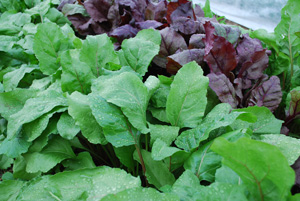
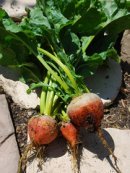
Amaranths (Chenopodioids): Beets | Spinach | Swiss Chard
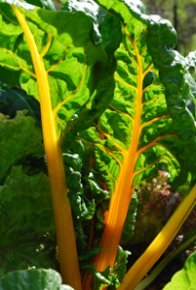

Amaranths grow all-time in the cooler temperatures of jump and fall. Most commodities—send up a flower stalk—quickly in loftier summer temperatures, although they can be grown in cooler microclimates, similar fractional shade from other vegetables.
Amaranths demand regular, steady water, and perform best in slightly alkaline soils with lots of organic matter and supplemental calcium. Beets are low-cal feeders, merely spinach and Swiss Chard do good from extra compost, composted manure, and high-calcium organic soil amendments similar dried, ground eggshells or basis oyster shells.
 |  |  |
Upward to Vegetable Plant Families NavBar
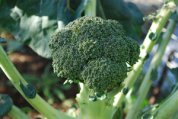
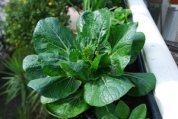
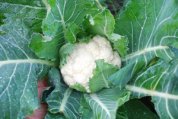
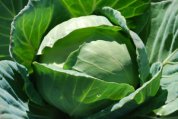
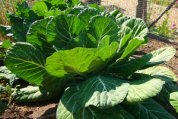
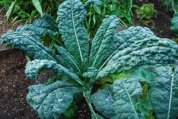
Brassicas (Crucifers): Asian Greens | Broccoli | Brussels Sprouts
Cabbage | Cauliflower | Collards | Kale | Radishes | Turnips
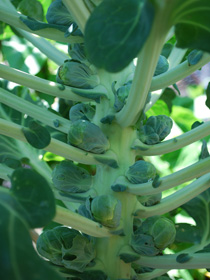
Brassicas , or Cruciferous Vegetables are cool-season vegetables that bolt in high summertime heat, just thrive in the cooler temperatures of jump and fall.
Continuous, steady growth is the primal to growing brassicas and other cool-season vegetables. Annihilation that disrupts this steady growth—like a hot, dry spell—signals the institute it'southward time to terminate making leaves, and shift to producing stalks, flowers, and seeds.
All brassicas need continuous, steady water, especially during dry out spells and unseasonal heat. Brassicas perform best in neutral to slightly alkaline soils with lots of organic matter and good drainage.
Incorporate a thick layer of good garden compost or composted manure into the soil at planting time. Employ less for root-forming brassicas like radishes and turnips, which are moderate feeders. Use more than for all other brassicas, which are heavy feeders.
If your soil is lean, brassicas benefit from supplemental organic soil amendments.
 |  |  |
 |  |  |
Up to Vegetable Plant Families NavBar
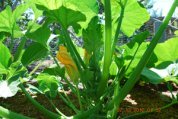
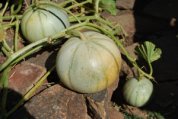
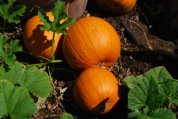
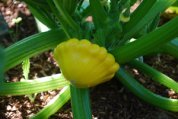
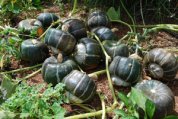
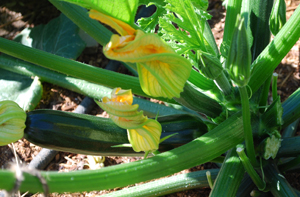
Cucurbits: Cucumbers | Melons | Pumpkins
Summer Squash | Winter Squash | Zucchini
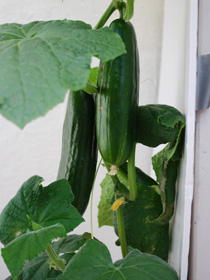
Cucurbits —cucumbers, melons, and squash—are sub-tropical natives grown as summer vegetables in temperate climates. Their leaves turn to green goo at the first touch of frost, so don't waste fourth dimension planting them too early.
Cucurbits are heavy feeders that perform best in a slightly acidic soil—pH half-dozen.5-seven—with ample organic thing. For data on lowering soil pH, click Hither.
Mix a thick layer of proficient garden compost or composted manure into the soil at planting time. Organic soil amendments tin be congenital into the soil when planting vegetables, for a sustained, summer-long release of nutrients.
Cucurbits, similar other fruiting plants, benefit from supplemental organic phosphate sources like colloidal phosphate.
 |  |  |
 |  |  |
Up to Vegetable Institute Families NavBar
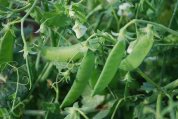
Legumes: Beans (Shelling) | Green Beans | Peas
| |
| © Steve Masley Click Paradigm to Enlarge |
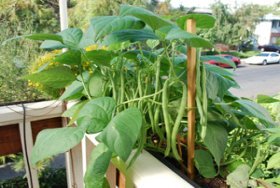
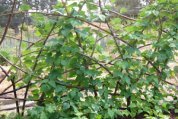
Legumes take both cool-season and summer vegetables in the same establish family unit. Peas and fava beans are cool-season plants that grow best in spring and fall, merely melt out in hot weather. Green beans are summer vegetables that languish and dice when the weather is consistently cold.
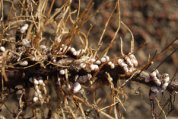
Legumes grow well in soils with aplenty organic matter and practiced drainage, but picayune or no fertilizer, since they're able to fix their own nitrogen fertilizer from the atmosphere thanks to symbiotic Rhizobia colonies on their roots.
In vegetable crop rotations, legumes are planted after heavy feeders to restore fertility to the soil.
Peas and fava beans similar a neutral to slightly alkali metal soil (pH 7-7.five), while green beans do better in a slightly acidic (pH 6.5-7) soil. See Changing Soil pH for data on adjusting soil pH.
 |  |  |
Upwards to Vegetable Plant Families NavBar
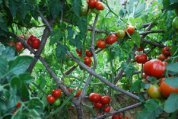
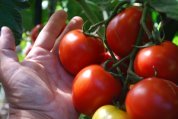
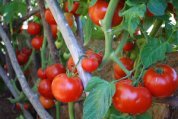
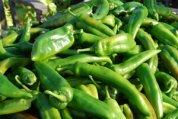
Nightshades (Solanacea): Eggplants | Hot Peppers (Chiles)
Sweet Peppers | Potatoes | Tomatoes
| |
| Masley…Click Epitome to Enlarge |
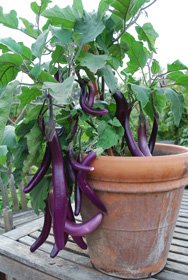
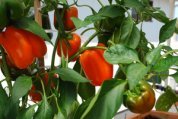
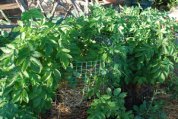
Nightshades include some of our favorite summer vegetables—tomatoes, peppers, chiles, eggplants, and potatoes. Like Cucurbits, they're subtropical natives grown as annuals in temperate zones.
They have little to no cold tolerance, and die at the first touch on of frost. With the exception of potatoes, they're grown for their fruit, instead of their leaves or stalks.
Nightshades are heavy feeders that like a loose, loamy soil with ample organic matter and adept drainage. Mix a thick layer of good garden compost or composted manure into the soil at planting time. Organic soil amendments tin can be built into the soil at planting time for a sustained, summer-long release of nutrients.
Nightshades benefit from supplemental organic phosphate sources like colloidal phosphate.
 |  |  |
 |  |  |
Up to Vegetable Plant Families NavBar
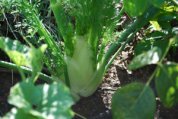
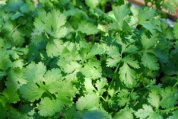
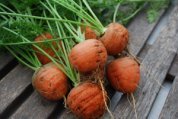
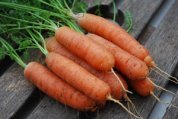
Umbellifers: Carrots | Celery | Cilantro
Dill | Fennel | Parsley | Parsnips
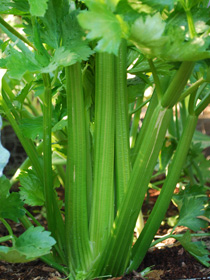
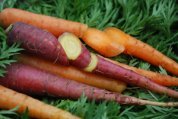
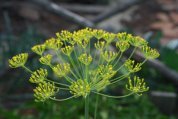
Umbellifers are generally cool-season vegetables, although many varieties are adapted to grow and even thrive in summer heat. They include tap-rooted vegetables similar carrots and parsnips, crops grown for their stalks, similar celery and fennel, and foliage vegetables/herbs, like parsley, cilantro, and dill.
Umbellifers need loose, expert-draining soil, but their nutritional needs vary. Celery and fennel are heavy feeders that practise well with the same soil regime as brassicas: lots of skillful garden compost or composted manure worked into the soil prior to planting, or the addition of other organic soil amendments.
Parsley, cilantro, and dill perform well in almost any garden soil, as long as information technology drains well. Carrots and parsnips are light feeders. Excess soil nitrogen produces huge green tops and skinny roots decumbent to forking, so avert planting them in the same bed as heavy feeders.
Umbellifers are besides amid the all-time plants for attracting benign insects to your garden, and sustaining them in one case they arrive. Their lacy leafage creates nevertheless pockets of air and proficient hunting for insect predators, and their abundant, tiny flowers attract parasitic wasps.
 |  |  |
 |  |  |
Up to Vegetable Plant Families NavBar
Miscellaneous Vegetables: Artichokes | Lettuce
Rhubarb | Sweet Corn
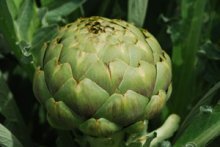
Some common garden vegetables—similar artichokes—have no close edible cousins in the aforementioned plant family, so I've included a "miscellaneous" photo gallery for these outrider vegetables.
The needs of these vegetables fit no common blueprint. For information on how to abound vegetables in this grouping, click on individual plant links.
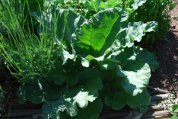 | 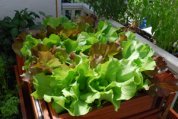 | 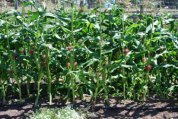 |
Top of How to Abound Vegetables
How To Grow…
Artichokes | Basil | Beans | Broccoli | Cabbage | Carrots
Cucumbers | Green Beans | Hot Peppers | Lettuce | Peppers
Spinach | Summertime Squash | Tomatoes | Winter Squash | Zucchini
Copyright © 2009-2020, by Steve Masley, Grow-it-Organically.com
All rights reserved
hooddustivoling1967.blogspot.com
Source: https://www.grow-it-organically.com/how-to-grow-vegetables.html
0 Response to "what chemicals are used to grow organic spinach"
Post a Comment